
Bessey Clamps
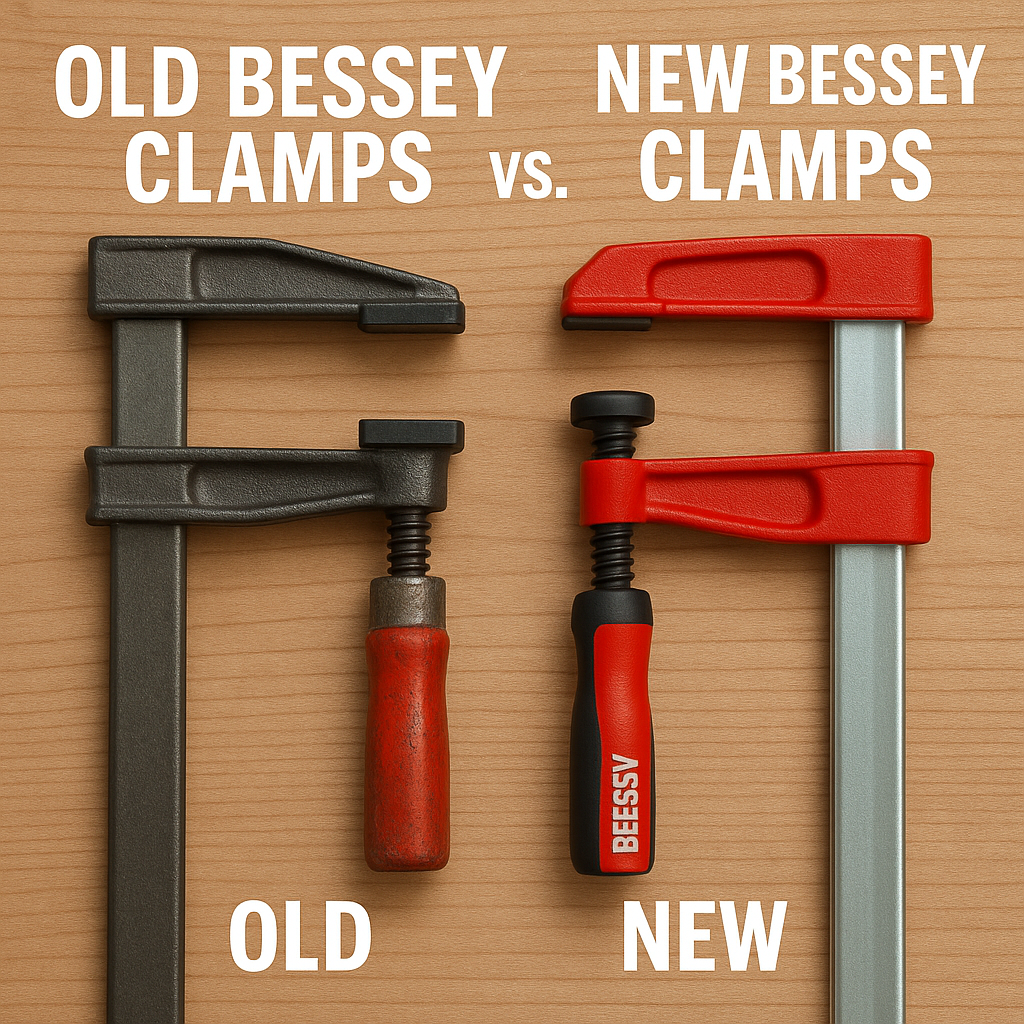
The question is: Old Bessey Clamps or New Bessey Clamps?
For decades, Bessey has been the name most woodworkers reach for when they want a clamp that simply works—day after day, board after board. Their classic red-handled clamps set the standard in shops around the world, and many of us still have older Bessey clamps hanging on the wall, ready for duty. But as Bessey continues to update designs, introduce new materials, and streamline manufacturing, the question naturally comes up: Are the old Bessey clamps better, or do the new models offer meaningful improvements?
Below is a closer look at how the generations compare, what’s changed, and what actually matters in day-to-day use.
Build Quality and Materials
Older Bessey clamps were famously overbuilt. Heavy steel bar stock, thick cast components, and simple mechanisms made them feel nearly indestructible. The mass alone helped them hold firm, and many clamps from the 1990s and early 2000s are still going strong with no signs of wear beyond a few glue spots.
Newer Bessey clamps remain well-made, but there are noticeable changes: slightly lighter bars, more refined castings, more polymer components, and a shift toward efficiency in manufacturing. These updates aren’t necessarily downgrades—they’re mainly about consistency, ergonomics, and cost control, but long-time users will immediately feel the difference in heft.
Jaw Face and Handle Design
Classic Bessey jaws used thick, rubber-like pads that stayed put and resisted glue buildup. They were simple, durable, and rarely needed replacement. The wooden handles on older clamps also had a chunky, traditional feel that offered strong grip without much fuss.
Modern Bessey clamps use updated jaw pads designed for better non-marring contact and easier replacement. The handles have also evolved, with composite or soft-grip options that are easier on the hands during long glue-ups. Some woodworkers love the new ergonomics; others prefer the no-nonsense feel of the originals.
Parallel Clamping Performance
One area where new Bessey clamps shine is precision. Their newer parallel-jaw models deliver more consistent clamping pressure across the face of the boards, thanks to improved guides and more accurate jaw tracks. If you’re doing panel glue-ups or casework, the updated engineering helps reduce twist and bow.
Older clamps, while very strong, weren’t always as consistent from one clamp to the next. Many veteran woodworkers have a mix of personalities hanging on the wall. Some clamps glide perfectly, others require persuasion
Durability Over Time
You’ll be hard-pressed to wear out an old Bessey clamp. The steel and cast parts were simply built to last, and many older clamps are still preferred in professional shops because of their long-proven lifespan.
Newer Bessey clamps should also last for decades, but because they incorporate more modern materials, time will tell how they age. Polymer handles and pads won’t fail quickly, but they do introduce new variables that older all-metal clamps never had to contend with.
Price and Value
To my chagrin old Bessey clamps have unexpectedly gained a secondary market. Woodworkers hunt for them at auctions, estate sales, or eBay because they still perform beautifully, sometimes better than new, and because they feel like tools built for the long haul.
New clamps, however, offer modern features, arguably better ergonomics, and more predictable performance. Bessey’s pricing has also become more competitive with other brands, making the new generation a great option for someone building out their first shop or expanding a clamp rack.
So Which Is Better?
It depends on what you value. Personally, I prefer the older Besseys and I hunt for them on eBay, especially the F-style. It’s impossible to have too many clamps.
If you want raw durability, old-school heft, and the confidence that comes from a tool proven over decades, the older Bessey clamps are hard to beat. There’s something satisfying about a clamp that has already lived a life and still outperforms many modern contenders.
If you want precise, predictable clamping with improved comfort and refined engineering, the new Bessey offerings make more sense. For panel glue-ups, casework, and repeatable results, the modern clamps earn their keep.
Final Thoughts
In many ways, this comparison isn’t about “better” or “worse,” but about tradition versus refinement. Old Bessey clamps represent an era of exceptionally robust manufacturing. New Bessey clamps reflect decades of learning; lighter, more ergonomic, and more precise.
As with most tools in the woodworking shop, the best setup might just be a blend: a row of your trusted old soldiers and a few modern recruits ready to take on the delicate work.
Bonus Tip
I learned this tip from Rob Cosman and it’s a good one. Get yourself some hockey stick tape and wrap it around the clamp handles. As you get older you’ll appreciate the extra grip. Rob’s technique involves wrapping the…well, let’s have Rob explain it himself - VIDEO